- Client
- Land Life
- Sector
- Reforestation & carbon
- Location
- Rungan, Central Kalimantan, Indonesia
- Year
- 2025
Measuring whether reforestation is bringing forest birds back in Borneo
We designed a bioacoustic baseline that lets Land Life compare its restoration sites with intact forest, and decide where to act next.
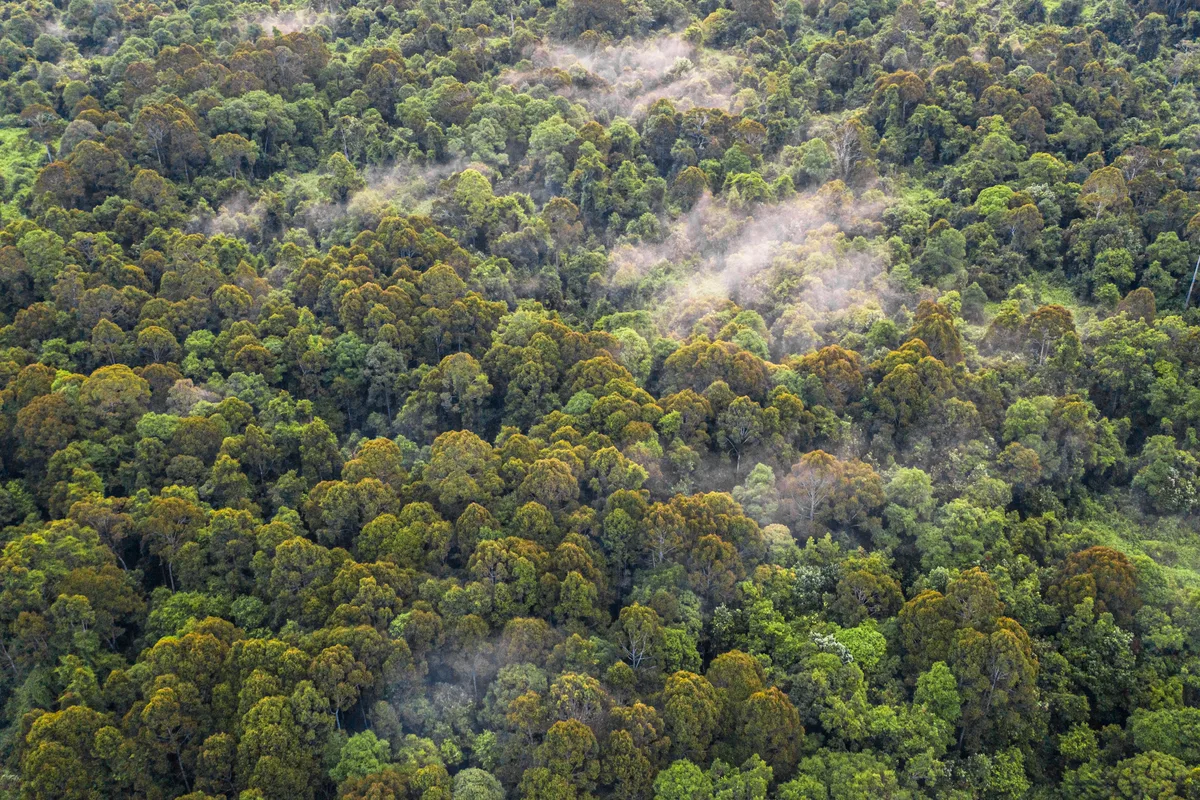
Peat-swamp and lowland forest in Borneo. © iStock
22
acoustic recording points
152
bird species detected
10 months
of continuous recording
The challenge
Land Life is restoring degraded peat and lowland forest in Borneo's Rungan landscape, home to Bornean orangutans. Counting trees shows planting progress, but not whether wildlife is returning. Land Life needed a credible baseline to measure ecological recovery over time.
What we did
We designed a structured sampling plan comparing a primary-forest reference site with two restoration areas. Land Life and its partners deployed 22 acoustic recorders between October 2024 and August 2025. We processed the recordings through our AI pipeline, verified detections and compared bird communities using diversity indices.
The outcome
The survey detected 152 bird species across the three sites. Land Life now has a baseline it can repeat to show whether forest birds are returning, plus specific management priorities for each restoration site. This gives it credible evidence of ecological recovery to share with partners and buyers. With the recordings held in NatureCube, each future survey can be compared directly with this baseline as the restoration progresses.